India is a cricket country. Everyone knows it, and nobody debates it. But underneath all that noise, across decades and different eras, a group of extraordinary footballers quietly built something remarkable. They did it without global contracts, without massive stadiums filled every week, and without the kind of media coverage that turns athletes into celebrities overnight. They did it out of sheer love for the game.
The story of Indian football is not one of World Cup appearances or continental dominance. It is something more human than that. It is the story of a striker who sold soda outside a stadium as a child and went on to score in 12 seconds for his country. It is the story of a goalkeeper who became the first Indian to play in a UEFA Europa League match. It is the story of a captain who stood at the level of Cristiano Ronaldo and Lionel Messi in the international goalscoring charts and still had to fight for recognition at home.
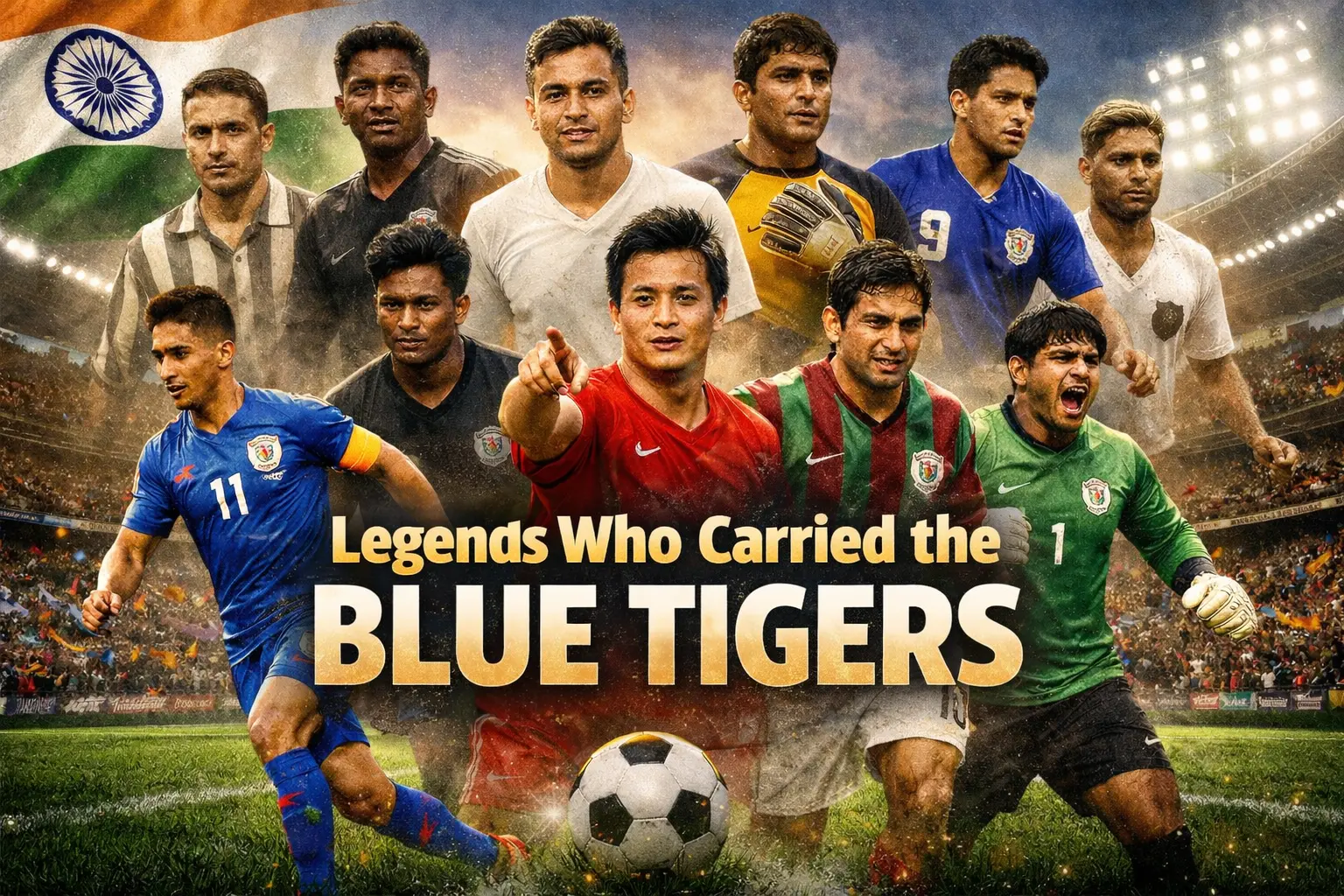
This list covers the 10 greatest Indian football players across all eras. Some carried the sport through its golden years in the 1950s and 60s. Others defined it for a generation in the 90s. A few are still shaping it right now. What connects all of them is the same thing — they made India believe football was worth caring about.
Table of Contents
Here is the list 10 Best Indian Football Players of All Time
01. Sunil Chhetri — The Greatest of Them All
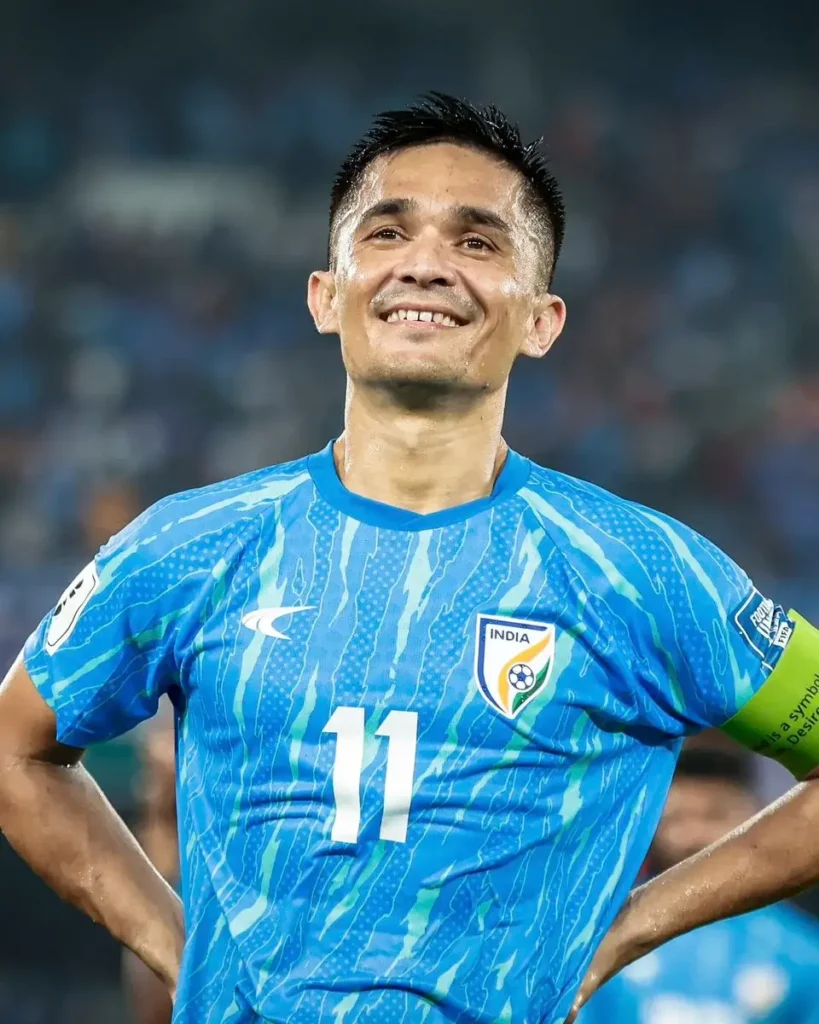
There is a point in a footballer’s career when the records stop being the most impressive part. Sunil Chhetri reached that point years ago. By the time he had accumulated 95 goals in 155 international appearances, putting him among the world’s leading goalscorers alongside Ronaldo and Messi, the numbers had become almost secondary to what he represented for the sport in India.
Born on 3 August 1984, Chhetri began his professional career at Mohun Bagan in 2002 and worked his way through the ranks with the kind of single-mindedness that defines great athletes. He was not the fastest player on the pitch. He was not the tallest. What he had was an almost surgical understanding of where to be, when to move and how to finish, and he combined it with a work rate that made teammates and coaches trust him completely.
He led India to victory in the 2008 AFC Challenge Cup, which qualified them for their first AFC Asian Cup in 27 years, and was named AIFF Player of the Year a record seven times. He signed for MLS side Kansas City Wizards, had a stint with Sporting CP in Portugal, and always came back to India with more to give. His leadership of Bengaluru FC produced ISL titles and a remarkable run to the AFC Cup final in 2016.
In June 2024, Chhetri announced his retirement from international football, but in March 2025, he came out of retirement to help the national team once more. That decision says everything about the man. Even after everything he has achieved, he still shows up.
| Position: | Forward | Caps: | 155+ | Goals: | 95 | Awards: | Khel Ratna, Padma Shri, Arjuna Award, AIFF PoY x7 |
02. Bhaichung Bhutia — The Sikkimese Sniper
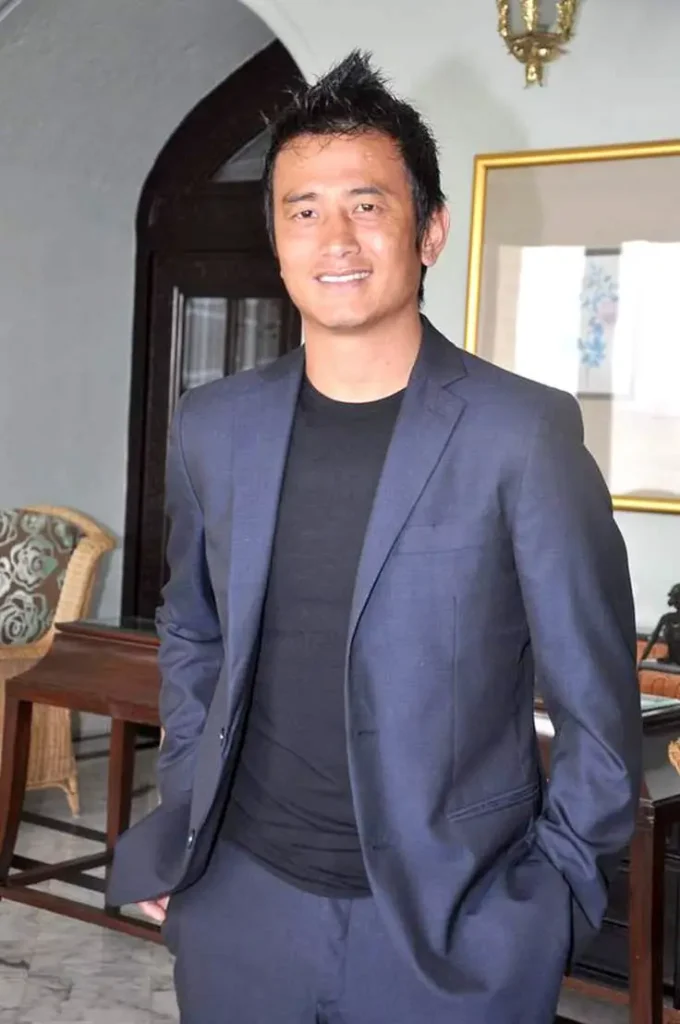
Before Chhetri, there was Bhutia. And in many ways, Bhaichung Bhutia did not just play football for India — he opened the door for every Indian player who came after him.
Raised in Sikkim amidst hilly terrain, Bhutia made his national debut at 19 and scored a hat-trick in the 1997 Nehru Cup. His historic move to England’s Bury FC in 1999 made him the first Indian to play professionally in Europe. That single transfer changed the conversation around Indian football. Suddenly, the idea that an Indian player could compete at a professional level in one of the world’s strongest footballing leagues was not just a dream. It had happened.
He racked up 82 caps and 27 goals for India, captained the side through the 2000s, and helped them qualify for the 2011 Asian Cup after a 27-year gap. He played for East Bengal and Mohun Bagan with the kind of intensity that made him a cult figure across the country and helped launch United Sikkim FC, contributing to Indian football even after his playing days ended.
His nickname, the Sikkimese Sniper, came from his precision in front of the goal. His legacy came from something harder to measure — the way he made a generation of Indian kids believe that football was a career worth chasing.
| Position: | Forward | Caps: | 82 | Goals: | 27 | Awards: | Arjuna Award, Padma Shri, SAFF Championships |
03. I.M. Vijayan — From Soda Seller to Football Legend
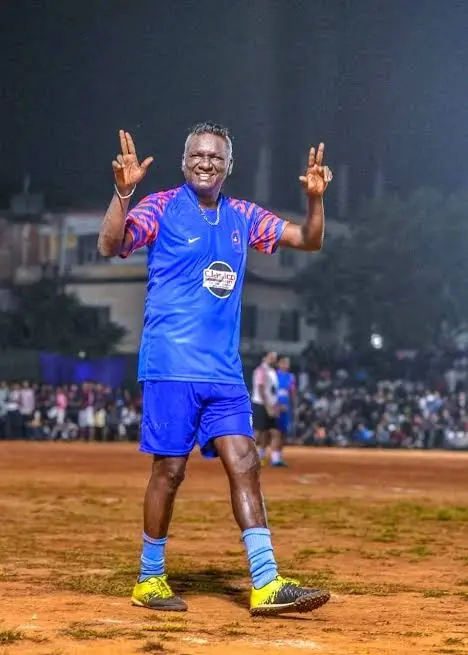
If you want to understand what Indian football is truly capable of producing, start with Imbichali Mohamed Vijayan. His origin story alone tells you everything. As a child growing up in Kerala, he sold soda outside stadiums. He went on to score in 12 seconds for India and became one of the most electrifying forwards the country has ever seen.
Known as Kalo Harin, meaning Black Buck in Bengali, Vijayan earned the title of Indian Player of the Year in 1993, 1997, and 1999, becoming the first to win this award multiple times. He scored 34 goals in 71 appearances for the national team. His partnership with Bhaichung Bhutia during the late 1990s and early 2000s was the most feared attacking combination Indian football had produced. They fed off each other’s strengths in a way that suggested an instinctive understanding developed over years of playing together at both club and international level.
Vijayan holds the distinction of being the first Indian player to score a hat-trick in a FIFA World Cup qualifier. He was dazzling with the ball at his feet, sharp in his movement and composed when it mattered most. The fact that he built this career without the professional infrastructure that modern players take for granted makes it all the more remarkable.
| Position: | Forward | Caps: | 71 | Goals: | 34 | Awards: | AIFF Player of the Year x3, Arjuna Award |
04. P.K. Banerjee — The Child Prodigy Who Never Stopped Giving
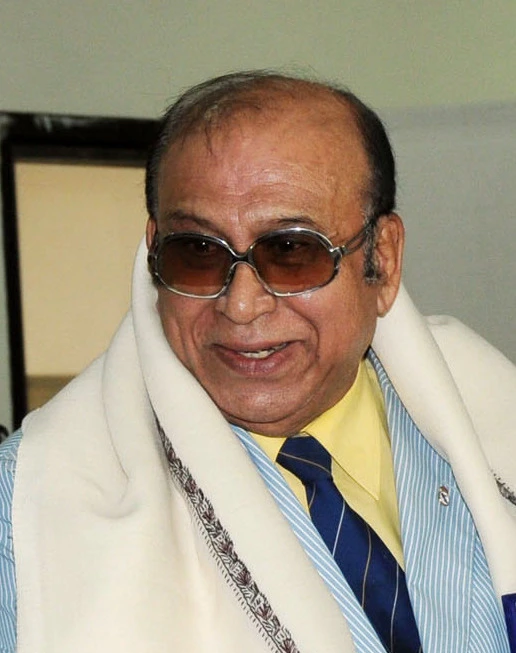
Pradip Kumar Banerjee represents Indian football’s golden era more completely than almost anyone else. He came into the game as a prodigy and left it as a giant, first as a player and then as one of the most respected coaches the country has produced.
Banerjee was a mercurial forward who could play any role in the front line. He made his senior debut at just 15 years of age. Known for his quick burst of pace and ability to take on defenders, he was an elite playmaker with excellent passing range. He played in two Olympic Games for India and was part of the side that achieved legendary status at the 1962 Asian Games in Jakarta.
He scored an important equaliser at the 1960 Summer Olympics against France and was a driving force in India’s 1962 Asian Games triumph. Later, he coached the national team and both Kolkata giants, East Bengal and Mohun Bagan, winning trophies from both sides of the touchline. FIFA awarded him the Centennial Order of Merit in 2004.
Together with Chuni Goswami and Tulsidas Balaram, he formed what Indian football history remembers as the Holy Trinity — an attacking unit that gave the country some of its finest moments on an international stage.
| Position: | Forward | Int’l Goals: | 19 | Awards: | FIFA Centennial Order of Merit, Arjuna Award, Padma Shri | Honours: | 1962 Asian Games Gold |
05. Chuni Goswami — The Legend Who Turned Down Tottenham
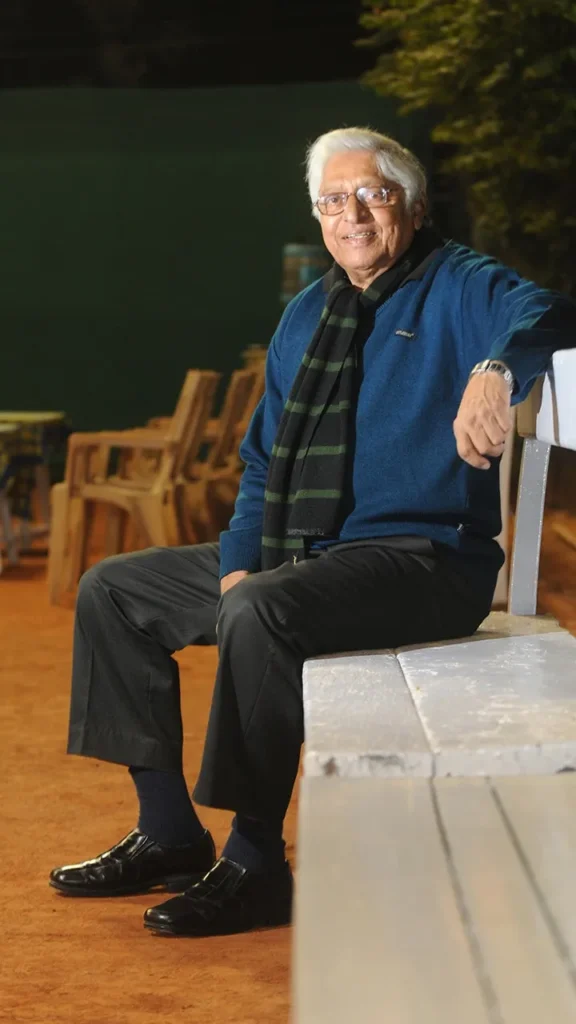
Some players are great. Others become symbols. Subimal Chuni Goswami was the latter, and the story of his turning down Tottenham Hotspur to stay at Mohun Bagan is one that Indian football has never quite stopped telling, because it captures something essential about the man and the era he belonged to.
Goswami captained India to gold at the 1962 Asian Games and played in 30 official international matches, scoring 9 goals. He appeared in the Olympics, Asia Cup, and Merdeka Cup. Tottenham Hotspur showed interest, but he stayed loyal to Mohun Bagan.
What made Goswami special was not just his ability on the ball — it was the imagination he brought to his play. He was the kind of player who could change a match through instinct alone, finding pockets of space that others did not see and delivering with the technical quality to make it count. He also played first-class cricket for Bengal, which tells you something about the natural athletic gifts he was working with.
His legacy in Indian football sits alongside Banerjee and Bhutia at the very top of the historical conversation, and it belongs there completely.
| Position: | Forward / AM | Caps: | 30 | Goals: | 9 | Awards: | Arjuna Award, Padma Shri | Honours: | 1962 Asian Games Gold, 1964 AFC runner-up |
06. Sandesh Jhingan — The Backbone of Modern Indian Defence
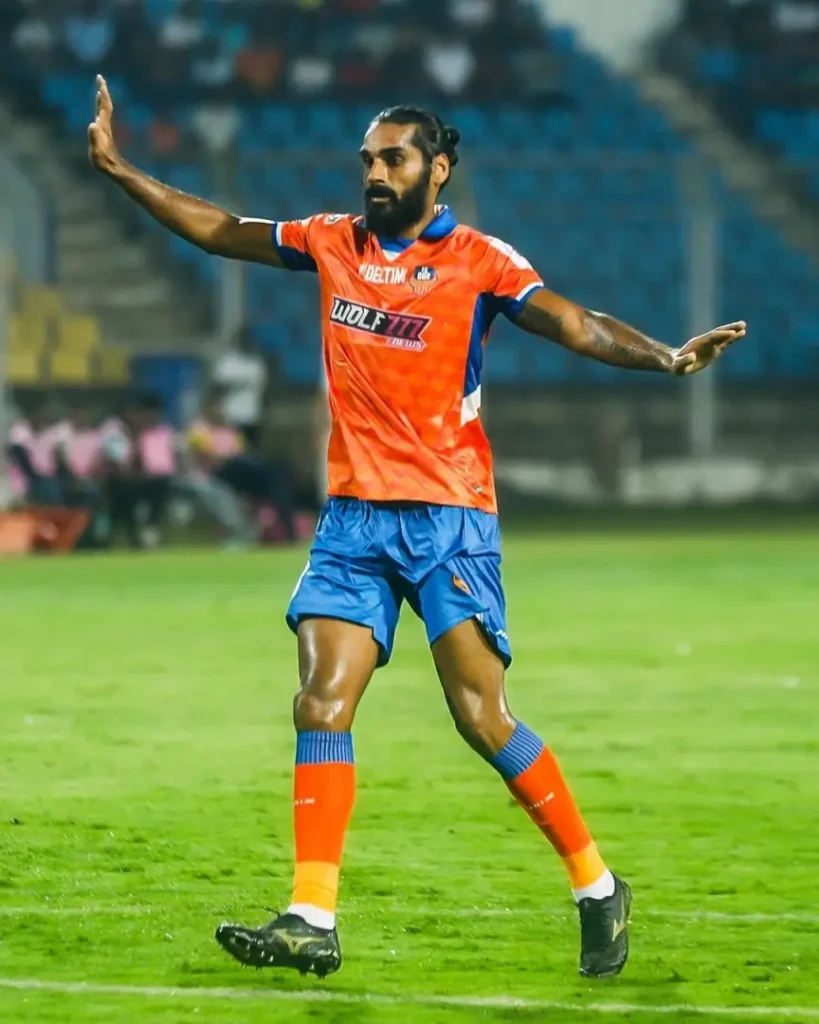
Every successful football team needs someone at the back who leads by example and makes the people around him better. For India in the modern era, that person has been Sandesh Jhingan.
Jhingan’s career gained significant momentum with his performance in the first season of the Indian Super League in 2014. Playing for Kerala Blasters, the young defender was instrumental in leading his team to the tournament’s final and earned the Emerging Player of the Season award. From that point on, he became central to everything India tried to do defensively.
He led India to a historic goalless draw against a strong Chinese national team in 2018, marking the first time the Blue Tigers remained unbeaten on Chinese soil. In the 2020-21 season, Jhingan was honoured with the AIFF Men’s Player of the Year Award. He also became the sole Indian footballer to join a Croatian club, securing a deal with Sibenik in the Croatian First Football League.
That move to Croatia was significant. It showed a defender willing to test himself in unfamiliar surroundings, and it added an international dimension to his development that made him an even more complete player on his return.
| Position: | Centre-Back | Awards: | AIFF Men’s Player of the Year 2020-21 | ISL: | Emerging Player of the Season | Milestone: | First Indian in Croatian top-flight |
07. Gurpreet Singh Sandhu — India’s Wall Between the Posts
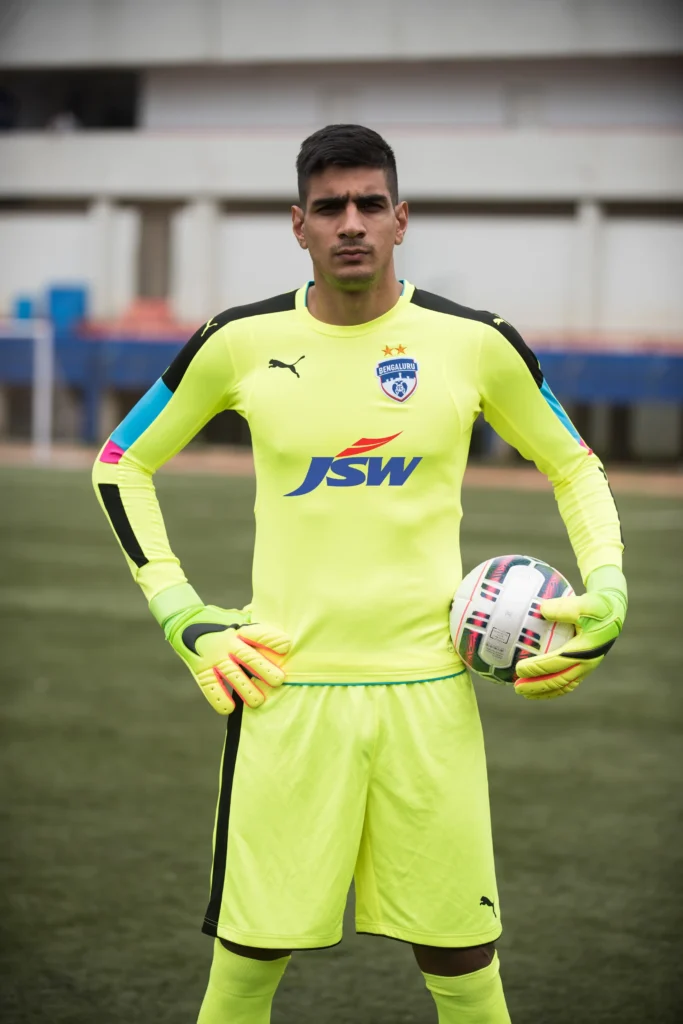
Goalkeepers are often the last people remembered in a football conversation, but Gurpreet Singh Sandhu has done enough to make that impossible in the context of Indian football. He is, without question, the finest goalkeeper the country has produced in the modern era.
Gurpreet Singh Sandhu is India’s premier goalkeeper, the first Indian to appear in a UEFA Europa League game, and remains a central part of India’s defence. That Europa League appearance, while on loan at Stabæk in Norway, was a milestone moment — the first time an Indian goalkeeper had played in a major UEFA club competition.
His shot-stopping is elite by any standard applied to Asian football. His ability to organise the defence in front of him, communicate effectively, and make crucial saves in high-pressure moments has made him the kind of goalkeeper opponents need a plan to beat. Under coaches like Igor Stimac, Sandhu has been the most consistent performer in the Indian setup, the one player whose quality was rarely in question even when results were difficult.
He has also been a symbol of possibility for a younger generation of Indian goalkeepers, proof that the country can produce a player capable of competing in European football.
| Position: | Goalkeeper | Milestone: | First Indian in UEFA Europa League | Club: | Bengaluru FC (ISL) | Awards: | AIFF Men’s Player of the Year |
08. Sailen Manna — The Captain Who Made History at the Olympics
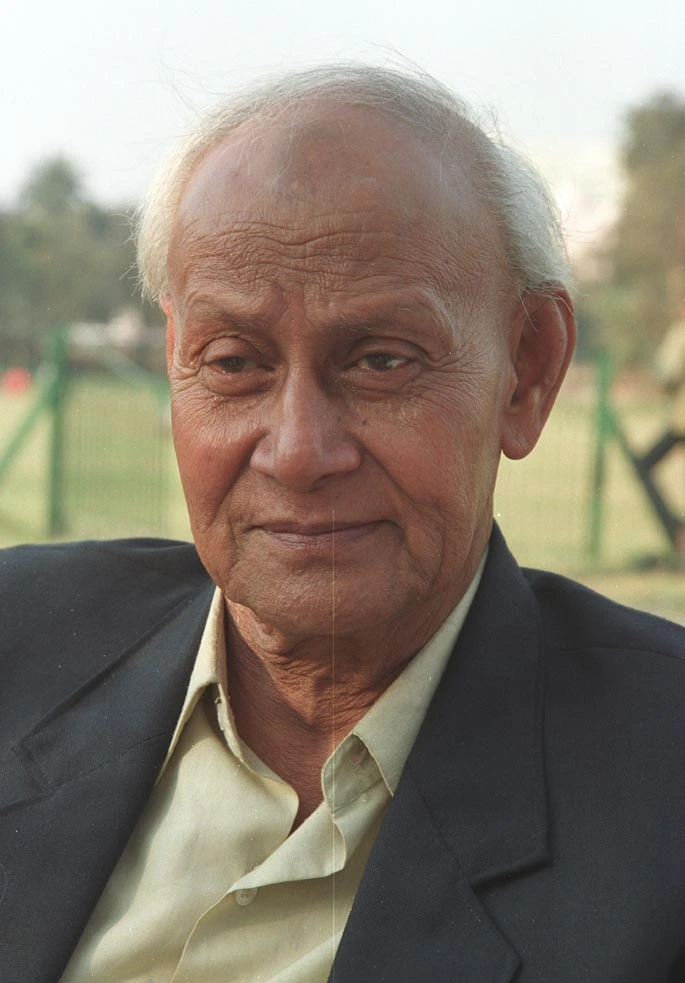
Long before the Indian Super League, long before professional contracts and structured academies, Indian football had players who competed at the highest international level on pure instinct and physical ability. Sailen Manna was one of the very best of them.
Manna’s tenure with the national team spanned from 1948 to 1956, primarily in the role of a left-back. He led India in various international competitions, including the Olympics and the Asian Games, achieving the remarkable feat of winning the gold medal at the 1951 Asian Games.
He captained India at the 1952 Helsinki Olympics and had previously been rated as among the world’s best 10 captains by the English FA. An Indian football captain being recognised at that level by England’s football association was not a small thing. It speaks to the quality of what Indian football was producing in that era and the stature Manna had built for himself through sheer performance.
His journey began with Howrah Union in 1940 before Mohun Bagan came calling, and the club move elevated both the player and, in time, the standing of Indian football itself.
| Position: | Left-Back / Defender | Era: | 1948 to 1956 | Honours: | 1951 Asian Games Gold | Milestone: | 1952 Olympics Captain, Top 10 Captain (English FA) |
09. Subrata Paul — The Spider-Man of Indian Football
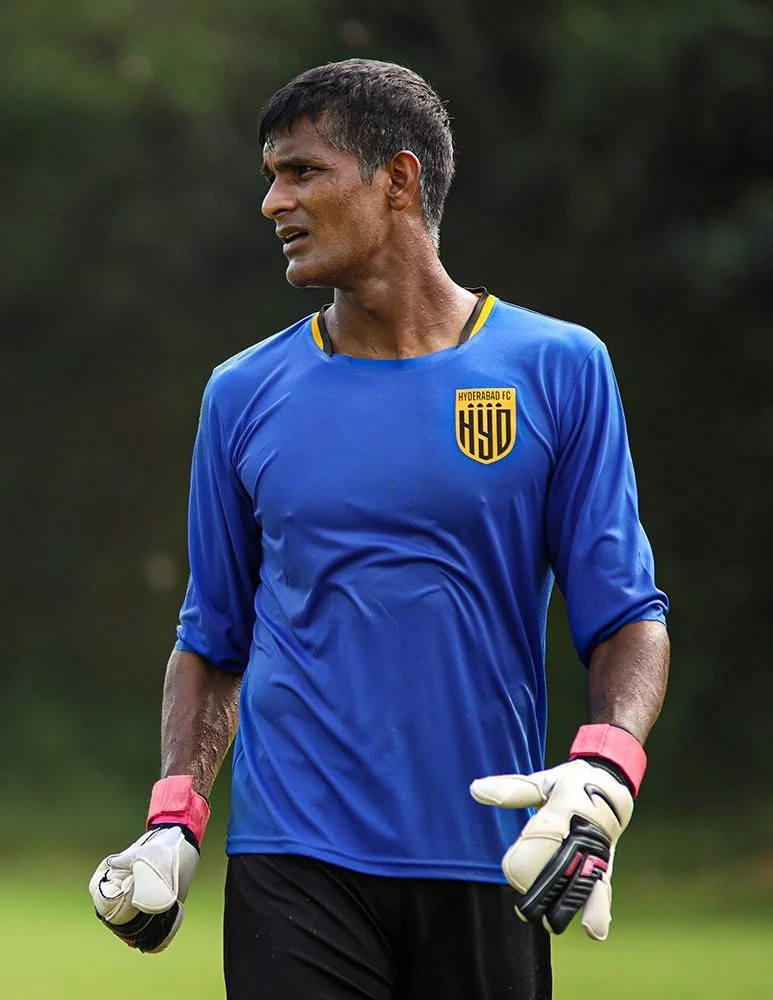
Every generation of Indian football has had its essential goalkeeper — the player who stood between the posts and gave the team belief when it needed it most. In the 2000s and into the early 2010s, that player was Subrata Paul.
Nicknamed the Spider-Man of Indian football, Paul is one of the best shot-stoppers the country has produced. The nickname came from his reflexes, which seemed to defy what was physically possible. He had a quality that only the very best goalkeepers possess — the ability to make the genuinely difficult save look routine and then produce something spectacular when it mattered most.
Paul played for multiple clubs across Indian domestic football and was the undisputed first choice for the national team during his peak years. He was one of the most recognisable faces in the Indian game, a player whose presence in the starting lineup gave opponents something to think about and gave his own teammates confidence.
His career coincided with a period when Indian football was still finding its way in the competitive landscape of Asian football, and he gave the national team a foundation to build from every time he took his position in goal.
| Position: | Goalkeeper | Nickname: | Spider-Man of Indian Football | Peak Era: | 2000s to early 2010s | Honours: | Multiple SAFF Championships |
10. Lallianzuala Chhangte — The Future of Indian Football
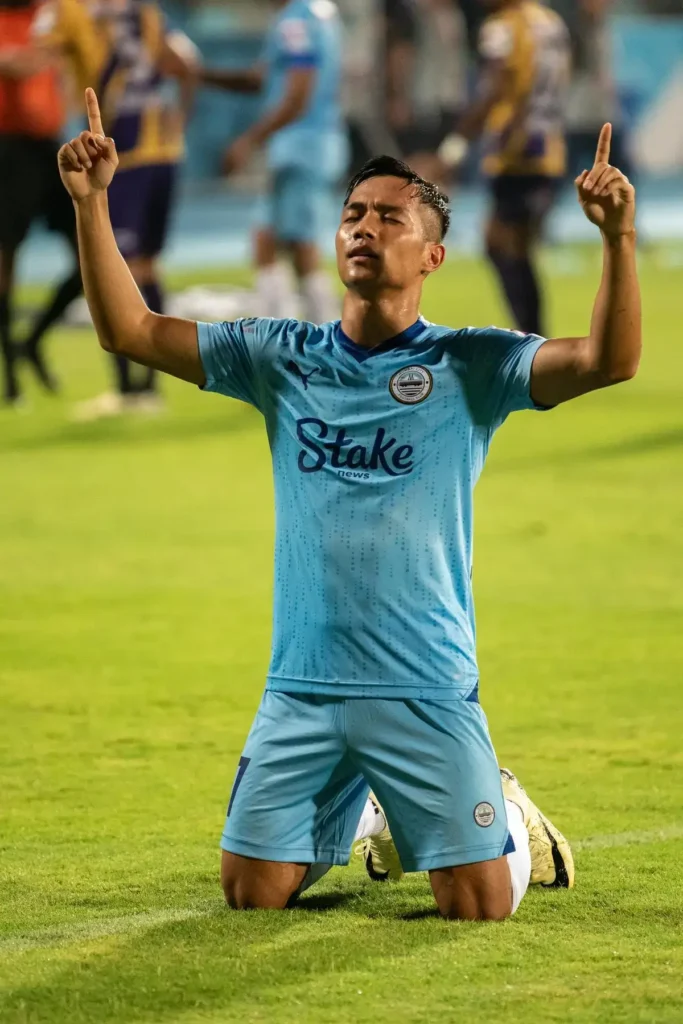
Every era needs its torch-bearer, and Lallianzuala Chhangte is the most exciting Indian footballer of the current generation. From Mizoram, a state with a deep footballing culture that the rest of India is only just beginning to properly appreciate, Chhangte brings pace, directness and technical quality that sets him apart in the Indian Super League.
Chhangte was the joint-top scorer of the tournament with Sunil Chhetri at the SAFF Championship, which tells you exactly where his standing is in the current Indian team. He is not a promising talent waiting to fulfil his potential. He is already delivering at the highest domestic level and beginning to do the same internationally.
His dribbling ability, his capacity to beat defenders in tight spaces, and his eye for goal make him the player most likely to carry Indian football forward into the next decade. At Mumbai City FC in the ISL, he has been consistently brilliant, earning recognition as one of the division’s finest wingers and drawing attention from outside the country.
| Position: | Winger / Forward | Club: | Mumbai City FC (ISL) | Awards: | AIFF Men’s Player of the Year 2022-23 | Origin: | Mizoram |
The Bigger Picture
What all ten of these players share is something that goes beyond goals, caps or trophies. Each of them, in their own era and their own way, made Indian football feel important. They gave fans a reason to watch, gave young players a reason to dream, and gave the sport credibility that it is still building on today.
Indian football has not reached its ceiling. If anything, the story feels like it is just getting interesting. The infrastructure is improving, the ISL has created a genuine domestic league culture, and players like Chhangte are showing what the next generation is capable of. The ten legends on this list built the foundation. What comes next is up to the players and fans who follow them.
Frequently Asked Questions
Who is the greatest Indian football player of all time?
Sunil Chhetri is widely regarded as the greatest Indian football player of all time. With 95 international goals in over 155 appearances, he is not only India’s all-time top scorer but has also ranked among the world’s leading active international goalscorers alongside Cristiano Ronaldo and Lionel Messi. His leadership, longevity and consistency across two decades of international football make his claim to the title completely undeniable.
Who was the first Indian footballer to play in Europe?
Bhaichung Bhutia became the first Indian footballer to play professionally in Europe when he signed for Bury FC in England in 1999. That move was a landmark moment for Indian football and opened up the possibility of Indian players competing at a professional level in European leagues, a conversation that had barely existed before Bhutia made it real.
Who is the best Indian goalkeeper of all time?
The modern answer is Gurpreet Singh Sandhu, who became the first Indian to play in a UEFA Europa League match and has been India’s undisputed number one for over a decade. For historical consideration, Subrata Paul and Peter Thangaraj both held the position with great distinction in their respective eras, with Thangaraj being particularly celebrated for his performances at the 1960 Rome Olympics.
What is India’s greatest achievement in football?
India’s most celebrated footballing achievement is winning the gold medal at the 1962 Asian Games in Jakarta, led by players like Chuni Goswami, P.K. Banerjee and Jarnail Singh. The 1951 Asian Games gold, India’s qualification for the 1956 Melbourne Olympics, and the 2008 AFC Challenge Cup victory under Sunil Chhetri are also landmark moments in the country’s football history.
Is Indian football improving?
Yes, and meaningfully so. The launch of the Indian Super League in 2014 created a professional domestic structure that Indian football had lacked for decades. Grassroots development has improved significantly, the quality of foreign investment in the league has raised standards, and players like Lallianzuala Chhangte are demonstrating that India can produce technically gifted footballers capable of competing at the Asian level. The road to a FIFA World Cup remains long, but the direction of travel is genuinely positive.
Also Read | 5 Expensive Indian commentators who charge the highest fees