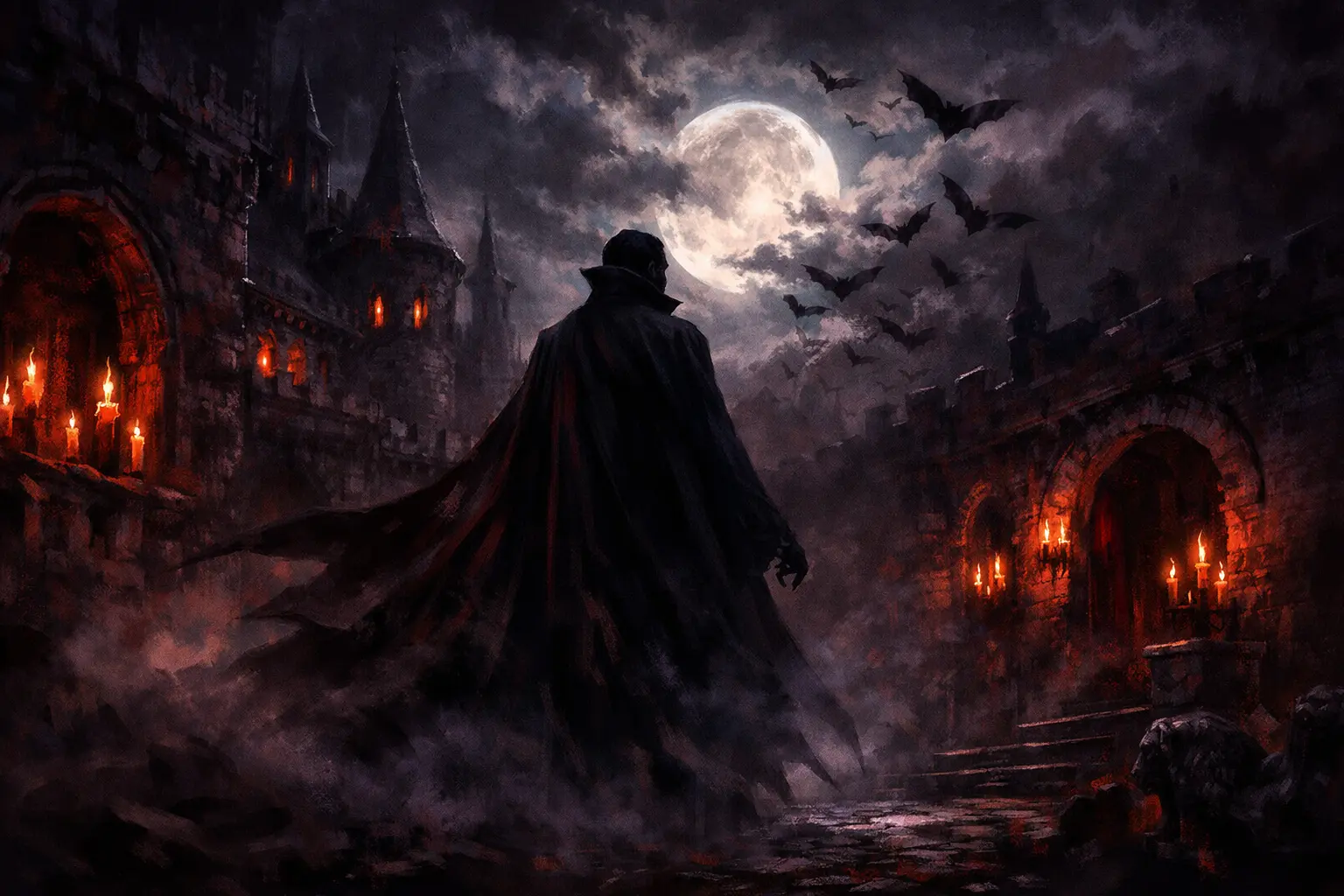
Few characters in the history of fiction have proven as stubbornly, magnificently immortal as Count Dracula. Since Bram Stoker first introduced the Transylvanian nobleman in his 1897 Gothic novel, the Count has been reincarnated on screen more times than any other literary monster. He has been played by legends, reinvented by auteurs, and reimagined across every era of cinema from the silent expressionism of 1920s Germany to the lavish gothic romanticism of Francis Ford Coppola and the brooding new wave of Robert Eggers. What makes Dracula endure is not merely the mythology around fangs and coffins. It is the deeper tension the character embodies: the seduction of darkness, the desire for immortality, and the terrifying idea that evil can wear a charming face.
This blog post covers the best Dracula movies ever made, ranked and reviewed with real IMDb scores, story breakdowns, and an honest assessment of what each film gets right. Whether you are new to the Count or a lifelong horror devotee, this is your definitive watch list.
Table of Contents
8 Best Dracula Movies Ever Made
#1 — Nosferatu: A Symphony of Horror (1922)
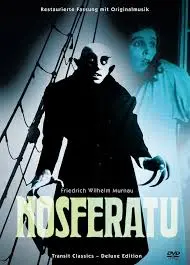
Director: F.W. Murnau
Stars: Max Schreck, Gustav von Wangenheim, Greta Schröder
Genre: Silent Horror / German Expressionism
IMDb Rating: ⭐ 7.8 / 10
The Story
Hutter, a young estate agent, travels to the remote Transylvanian castle of Count Orlok to complete a property deal on behalf of his employer. What begins as a business trip quickly becomes a nightmare. Orlok is no ordinary nobleman. He is gaunt, rat-faced, and ancient beyond reckoning, with a hunger that no amount of real estate can satisfy. As Hutter becomes his reluctant prisoner, back home in Wismar, his wife Ellen begins to experience disturbing visions, haunted by a psychic bond she cannot explain. Orlok sets sail for Germany, carrying with him not only his coffin but a tide of plague rats and a creeping death that spreads from port to port. Only an act of pure selfless sacrifice can end his reign of terror.
Why It Belongs on This List
Nosferatu is the beginning. Not just the beginning of Dracula on film, but the beginning of horror cinema as we know it. F.W. Murnau shot this unauthorised adaptation of Stoker’s novel on location in the real Carpathian landscapes of Eastern Europe, giving it an authenticity that studio productions simply could not replicate. Max Schreck’s Count Orlok remains one of the most genuinely unsettling creatures ever committed to celluloid. Unlike the suave, romantic Dracula that would follow in later decades, Orlok is skeletal and rat-like, a physical embodiment of pestilence and death. The famous staircase scene, where his elongated shadow climbs the wall ahead of him, has been imitated countless times but never bettered. The film is over a hundred years old, and it can still make the skin crawl.
#2 — Nosferatu the Vampyre (1979)
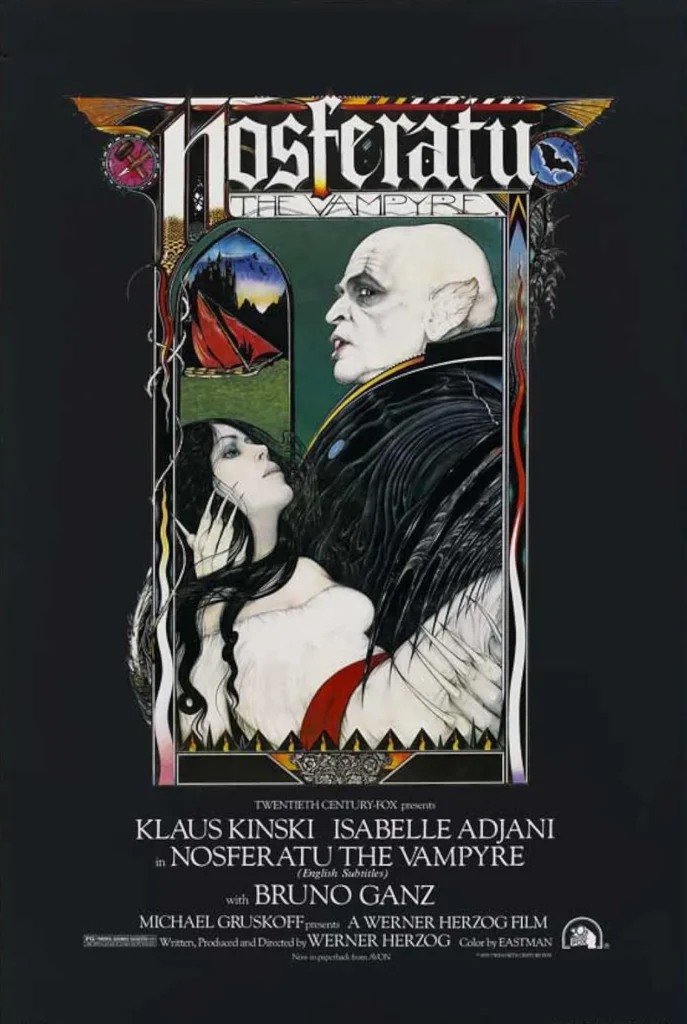
Director: Werner Herzog
Stars: Klaus Kinski, Isabelle Adjani, Bruno Ganz
Genre: Gothic Horror / Art House
IMDb Rating: ⭐ 7.4 / 10
The Story
Jonathan Harker, an estate agent in 19th-century Wismar, is sent by his employer, Renfield, to the remote castle of Count Dracula in Transylvania. The journey itself is a slow descent into dread, with the local villagers warning him at every turn to turn back. Upon arriving, Jonathan meets Dracula, a bald, pale, wretched creature with enormous ears and rat-like teeth, who becomes transfixed by a portrait of Jonathan’s wife, Lucy. While Jonathan remains at the castle, powerless to leave, Dracula books passage on a ship to Wismar. The vessel arrives in port crewed only by corpses and overrun with rats. Lucy, understanding what is coming, resolves to use the psychic connection between herself and the Count to destroy him at the cost of her own life.
Why It Belongs on This List
Werner Herzog made this film as a deliberate act of homage to Murnau’s silent original, and it is one of the most beautiful horror films ever shot. Klaus Kinski’s Dracula is not the suave predator of Hammer fame or the romantic lead of Coppola’s vision. He is a pitiable, monstrous, lonely thing, doomed to an immortality he clearly experiences as suffering. This lends the film an unusual emotional register, somewhere between horror and elegy. Isabelle Adjani is extraordinary as Lucy, and Bruno Ganz brings an everyman quality to Harker that makes his slow unravelling genuinely distressing. Roger Ebert gave it four stars, called it meditative and hauntingly beautiful, and later added it to his Great Movies collection. It remains the most purely poetic vampire film ever made.
#3 — Bram Stoker’s Dracula (1992)
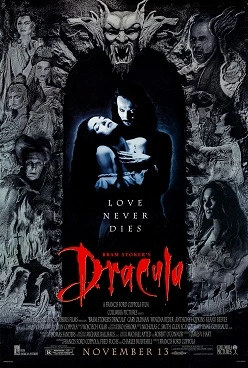
Director: Francis Ford Coppola
Stars: Gary Oldman, Winona Ryder, Anthony Hopkins, Keanu Reeves
Genre: Gothic Horror / Romance
IMDb Rating: ⭐ 7.4 / 10
The Story
The film opens in 1462 with Vlad the Impaler returning from war to find that his wife Elisabeta has been falsely told of his death and has taken her own life. Grief turning to rage, Vlad renounces God and transforms into something ancient and monstrous. Four centuries later, in Victorian London, Jonathan Harker travels to Transylvania to assist the Count with property dealings and becomes his prisoner. Dracula is drawn to Mina Murray, Jonathan’s fiancée, convinced she is the reincarnation of his long-dead wife. He travels to London and begins to weave himself into her life, while Van Helsing assembles a small band of determined hunters to track him back to his homeland and destroy him before Mina is lost forever.
Why It Belongs on This List
Coppola’s Dracula is above all a visual feast. The costume design won three Academy Awards, and every frame of the film looks like a painting dragged from the darkest corner of a Victorian nightmare. Gary Oldman’s performance is one of the most daring portrayals of the Count ever committed to film. He plays Dracula across wildly different physical forms: a stooped, white-haired old man, a sleek young aristocrat in a red suit, a wolf, a shadow. Oldman brings tragedy and longing to the role in a way that most interpretations never attempt. The film is not without its flaws, Keanu Reeves’ performance as Harker is frequently cited as a weak link, but the sheer ambition and craft of Coppola’s vision, its handmade special effects, its lush score and its operatic emotional scale, make it essential viewing.
#4 — Dracula (1931)
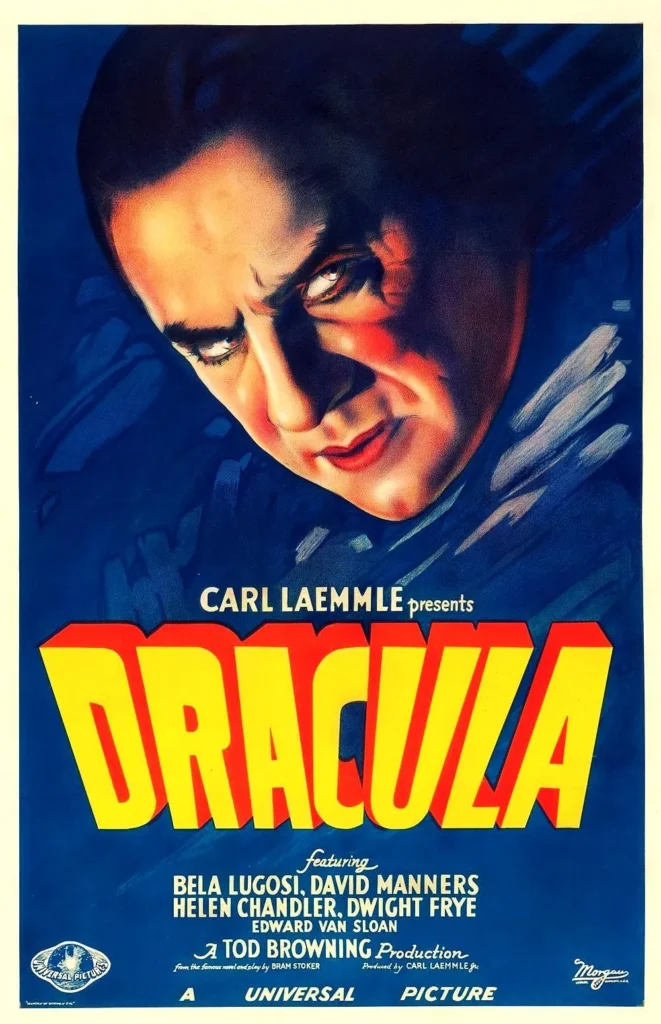
Director: Tod Browning
Stars: Bela Lugosi, Helen Chandler, Dwight Frye
Genre: Horror / Drama
IMDb Rating: ⭐ 7.3 / 10
The Story
Renfield, a solicitor, travels to Transylvania to finalise a real estate transaction with the mysterious Count Dracula. What he encounters at the castle transforms him from a professional man into a gibbering, insect-eating madman enslaved to the Count’s will. Dracula sails to England in the company of his new servant, takes up residence at the crumbling Carfax Abbey, and begins preying on the social circles of London. He sets his sights on Mina Seward, a young woman whose friend Lucy is already falling under his influence. Standing in the way of the Count’s plans is Professor Van Helsing, a scholar who sees through Dracula’s charm and knows exactly what it will take to stop him.
Why It Belongs on This List
Bela Lugosi’s performance in this film is one of the most influential in cinema history. His accent, his sweeping cape, his hypnotic eyes and the measured cadence of his voice created the template for the romantic, aristocratic Dracula that the world has recognised ever since. The film was made at Universal during the early sound era, and while its staginess occasionally shows, the first act in Transylvania is genuinely atmospheric and quietly menacing. Lugosi commands every scene he inhabits. For better or worse, this is the performance that defined the Count for generations, and watching it remains a fascinating experience.
#5 — Horror of Dracula (1958)
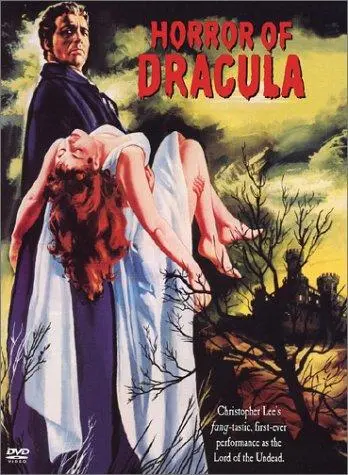
Director: Terence Fisher
Stars: Christopher Lee, Peter Cushing, Michael Gough
Genre: Gothic Horror
IMDb Rating: ⭐ 7.2 / 10
The Story
Jonathan Harker arrives at Dracula’s castle not as an innocent estate agent but as a knowing vampire hunter, posing as a librarian to get close to his prey. His plan goes badly wrong, and he is turned. When his friend Dr. Van Helsing arrives to investigate, he discovers Harker’s fate and finds himself in a race to prevent Dracula from claiming the women closest to him as his next victims. The film strips away much of Stoker’s sprawling narrative to deliver a lean, tightly paced gothic thriller, moving swiftly from Transylvania to the English countryside where the battle between Van Helsing and the Count reaches a fiery conclusion.
Why It Belongs on This List
Hammer Horror’s first Dracula film was a revelation when it arrived in 1958. It was shot in vivid Technicolour at a time when most horror had been black and white, and the effect was visceral in a way audiences had never experienced. Christopher Lee brought a physicality and sexual menace to the role that Lugosi had never attempted. Towering and intimidating, with blood-red eyes and genuine ferocity, his Count was terrifying in an entirely different way. Equally important was Peter Cushing’s Van Helsing, one of cinema’s great monster hunters. Cushing plays the role with intelligence, warmth, and absolute conviction, making the confrontation between the two feel like a genuine clash of titans. This film launched one of the most beloved series in horror history.
#6 — Nosferatu (2024)
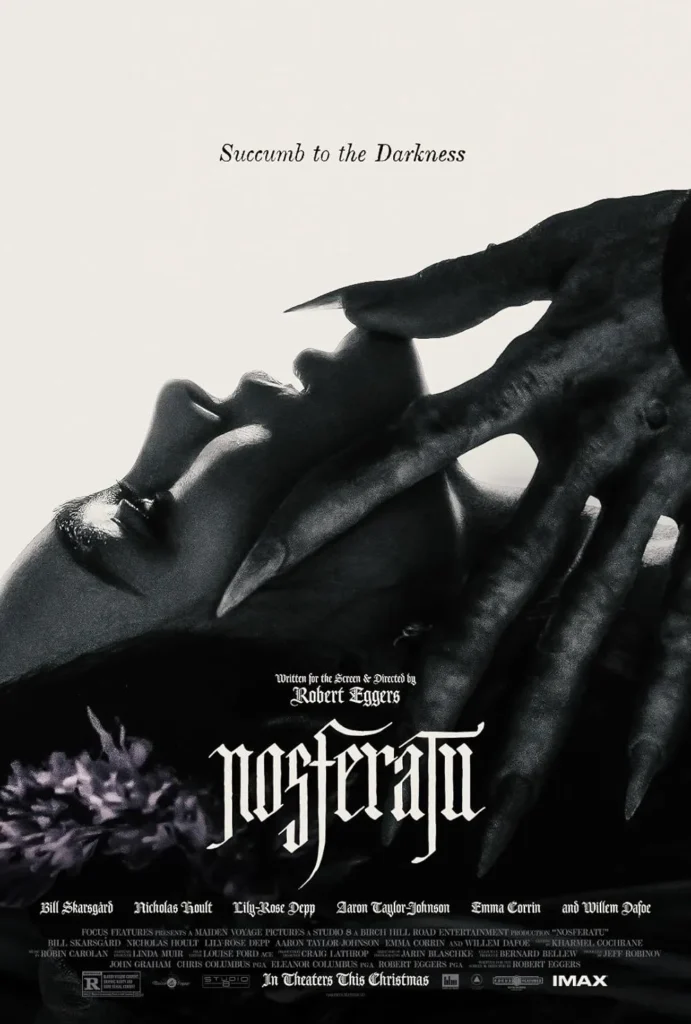
Director: Robert Eggers
Stars: Bill Skarsgård, Lily-Rose Depp, Nicholas Hoult, Willem Dafoe
Genre: Gothic Horror
IMDb Rating: ⭐ 7.1 / 10
The Story
In 19th-century Germany, a young woman named Ellen Hutter made a desperate, lonely prayer as a child, and something ancient and terrible answered. Years later, her husband Thomas is sent to Transylvania to conduct a property transaction for their employer, where he encounters the client: Count Orlok, a vast, malevolent presence who has been drawn across centuries by his obsession with Ellen. While Thomas is kept as a reluctant guest at Orlok’s castle, Ellen’s condition deteriorates, seized by visions and afflictions that the medical establishment cannot explain. When Orlok sets sail for Germany, carrying plague and shadow with him, Ellen begins to understand that the only person who truly knows how to stop him is herself, and that stopping him will require a sacrifice that no one else can make for her.
Why It Belongs on This List
Robert Eggers spent nearly a decade developing this film, and the care is visible in every meticulously crafted frame. The production design, the period costumes, and the fog-soaked cinematography all achieve a level of authenticity rarely seen in horror cinema. Bill Skarsgård’s Orlok is nothing like any Dracula that has come before: massive, archaic, and completely alien, more force of nature than seducer. Lily-Rose Depp delivers the performance of her career as Ellen, carrying the emotional weight of the entire film on her shoulders and doing so with real power. The film grossed over $181 million worldwide against a $50 million budget and reignited mainstream interest in classical gothic horror. It is not a comfortable watch, but it is an exceptional one.
#7 — Dracula: Prince of Darkness (1966)
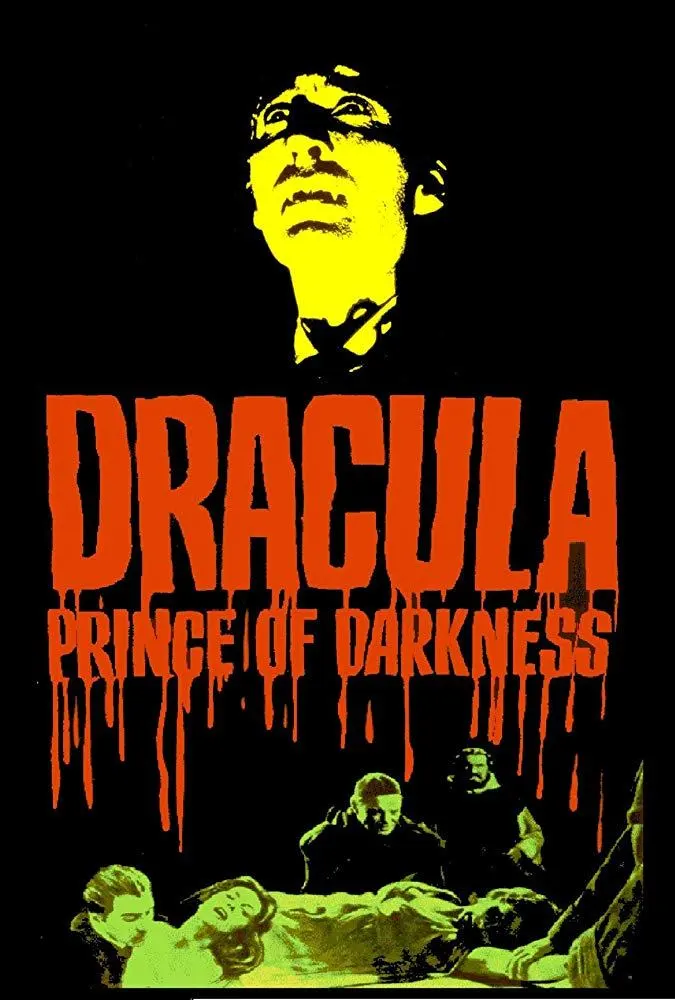
Director: Terence Fisher
Stars: Christopher Lee, Barbara Shelley, Andrew Keir
Genre: Gothic Horror
IMDb Rating: ⭐ 6.8 / 10
The Story
Ten years after the events of Horror of Dracula, four English tourists are stranded in the Carpathian Mountains and take shelter in Dracula’s seemingly abandoned castle. Their host turns out to be the Count’s devoted servant Klove, who has never given up on reviving his master. One of the tourists is murdered, his blood used to resurrect Dracula, who immediately sets about claiming the surviving members of the group. The only thing standing between them and the Count is Father Sandor, a no-nonsense monk with a thorough knowledge of vampire lore and no patience for those who don’t take it seriously.
Why It Belongs on This List
Christopher Lee reportedly refused to speak any of the dialogue he was given for this film because he found it beneath the character, resulting in Dracula having no lines whatsoever throughout the entire running time. The extraordinary thing is that it works brilliantly. Lee communicates menace, intelligence and cold fury entirely through physical presence, and the effect is deeply unsettling in a way that overly verbose monsters rarely achieve. Barbara Shelley’s transformation from prim English tourist to feral vampire bride is one of the most startling in Hammer’s catalogue. Terence Fisher’s direction is atmospheric and assured, and the castle setting is everything you could want from a Dracula film.
#8 — Dracula (1979)
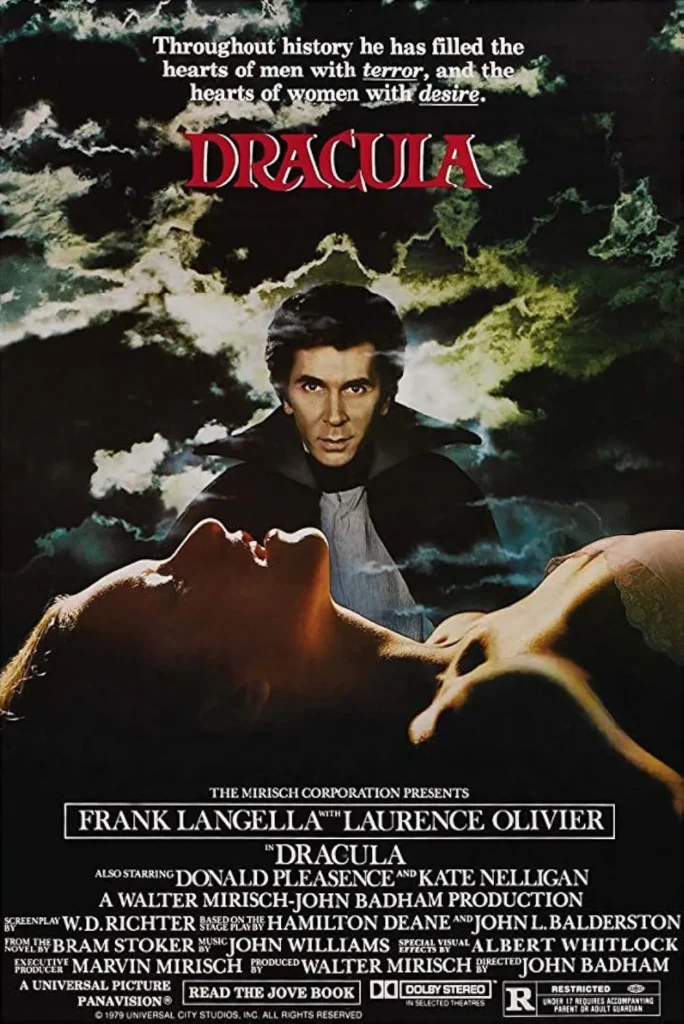
Director: John Badham
Stars: Frank Langella, Laurence Olivier, Donald Pleasence
Genre: Gothic Horror / Romance
IMDb Rating: ⭐ 6.5 / 10
The Story
Set in 1913, Count Dracula arrives in England after a storm shipwrecks him near the Seward estate. Charming, cultivated, and impossibly handsome, he quickly ingratiates himself with the household, including Dr. Seward and his daughter Lucy. As Lucy falls increasingly under his spell and Mina begins to suffer her own dark episodes, Professor Van Helsing arrives from Europe and recognises immediately what they are dealing with. The film follows the familiar Stoker architecture but leans heavily into the romantic dimension, presenting Dracula not as a predator lurking in shadow but as an almost irresistible figure whose attention feels like a kind of privilege to those he fixes it upon.
Why It Belongs on This List
Frank Langella brought something to Dracula that very few actors have managed before or since: genuine sex appeal combined with an undercurrent of real danger. He had played the role to enormous acclaim on Broadway, and the film capitalises fully on his theatrical magnetism. This is a Dracula who does not need to hypnotise his victims into submission because they seem to want to go to him willingly, which is, in its way, far more unsettling than brute force. Laurence Olivier as Van Helsing brings a gravitas to the proceedings that anchors the supernatural elements firmly in human stakes. It is an underrated entry in the Dracula canon and one that rewards revisiting.
FAQs
1. What is the best Dracula movie ever made?
The answer depends on what you value most in a Dracula film. If atmosphere and historical significance matter most, Nosferatu (1922) is unmatched. For sheer entertainment and iconic performance, Bela Lugosi’s Dracula (1931) or Christopher Lee’s Horror of Dracula (1958) are the obvious choices. For visual ambition and emotional complexity, Francis Ford Coppola’s Bram Stoker’s Dracula (1992) is hard to beat. Werner Herzog’s 1979 version is the most artistically haunting. The best film depends on the mood you’re in and what you want from your vampire.
2. Which actor has played Dracula the most times?
Christopher Lee holds the record by a significant margin, having played Count Dracula in seven Hammer Horror films between 1958 and 1973. Bela Lugosi is a close second, having played the role in multiple productions throughout the 1930s and 1940s. Both actors left such indelible marks on the character that their interpretations continue to influence every Dracula portrayal made today.
3. Is Nosferatu the same as Dracula?
Nosferatu (1922) is an unauthorised adaptation of Bram Stoker’s Dracula novel. Because the studio could not obtain the rights, they changed the character names, renaming Count Dracula as Count Orlok and the location from London to a German town. The story is essentially the same. Stoker’s widow sued after the film’s release and won a court order to destroy all prints of the film, but several survived and were later restored. The name Nosferatu has since become synonymous with this particular visual interpretation of the vampire.
4. What is the highest-rated Dracula movie on IMDb?
Nosferatu: A Symphony of Horror (1922) holds the highest IMDb rating among dedicated Dracula films at 7.8 out of 10. Bram Stoker’s Dracula (1992) and Nosferatu the Vampyre (1979) both sit at 7.4, while Dracula (1931) holds a 7.3.
5. Is Dracula based on a real person?
Bram Stoker drew partial inspiration from the historical figure Vlad III of Wallachia, known as Vlad the Impaler, a 15th-century Romanian prince notorious for the extreme brutality of his methods against enemies. Stoker borrowed the name and the Transylvanian setting, but the character of Count Dracula as a vampire is largely a fictional creation rooted in Eastern European folklore rather than direct historical biography. The connection between Vlad and the vampire mythology was strengthened considerably in popular culture after the novel’s publication.
6. Are the Dracula films connected to each other?
Most Dracula films are standalone adaptations of Bram Stoker’s novel rather than sequels to one another. The Hammer Horror series featuring Christopher Lee is the major exception, comprising a sequence of loosely connected films that continue the story across multiple entries. Outside of that series, each studio and director has generally approached the material fresh, which is part of why so many different interpretations exist and why the character continues to be reimagined generation after generation.
7. What is the difference between Dracula and a vampire?
Dracula is a specific fictional character, the Count created by Bram Stoker in his 1897 novel, while a vampire is the broader category of supernatural creature that Dracula belongs to. Vampires in folklore and fiction generally share characteristics such as feeding on blood, sensitivity to sunlight, and various supernatural abilities and vulnerabilities. Dracula is the most famous vampire in literature and film, and his portrayal has so thoroughly shaped public understanding of what a vampire is that the two have become almost synonymous in popular culture, even though vampire mythology predates Stoker’s novel by centuries.
Also Read | Hollywood in 2026: Power, Profit, Streaming & the Future of Global Cinema