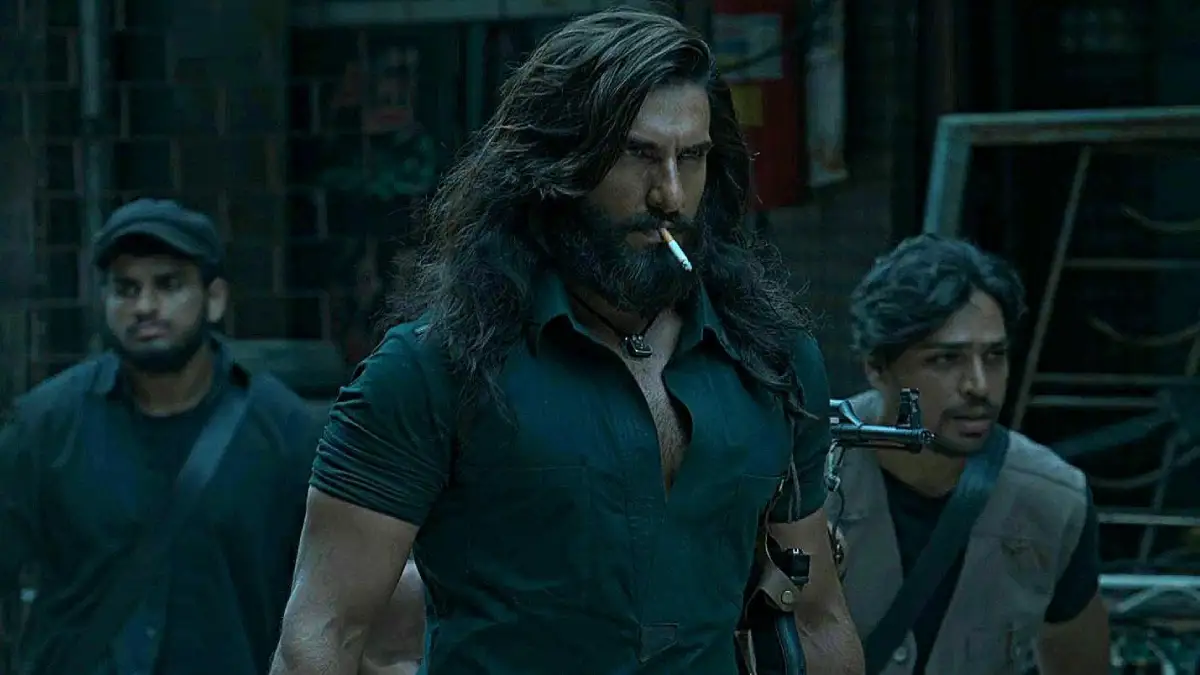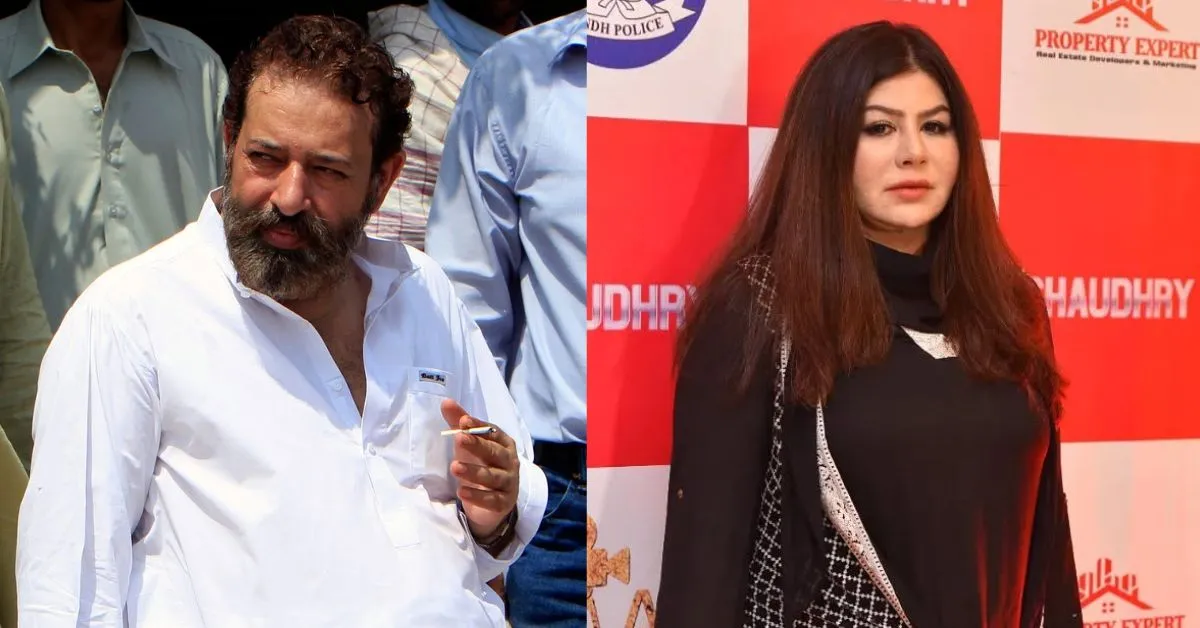
The film Dhurandhar 2 is taking the box office by storm; its success is resonating globally. Sanjay Dutt portrayed the role of Pakistani police officer Chaudhry Aslam in the movie. “Everyone appreciated Sanju Baba’s performance in this character. However, the real Chaudhry Aslam’s wife, Noreen, stated that the film presents an inaccurate portrayal of her husband. In an exclusive interview with Aaj Tak, Noreen reacted to the Lyari operation and the encounter involving Rehman Dakait, in addition to addressing the death of her husband, Chaudhry Aslam.
Table of Contents
What was said about Chaudhry Aslam’s character in Dhurandhar?
Chaudhry Aslam was deeply devoted to his profession. News stories about him were published everywhere—from London to America. Speaking of the film Dhurandhar, the role fits Sanjay Dutt perfectly, and his physical appearance and styling are excellent. The negative aspects portrayed in the film—such as his alleged involvement in fake encounters or the killing of children—bore no resemblance to reality. Chaudhry used to say that a film based on his life would be made after his passing.
A film was indeed made, but it failed to do full justice to Chaudhry’s character. If they were going to make the film, they should have at least made a phone call—to me, to the police, to a journalist, or to his family—to understand both the positive and negative facets of Chaudhry’s personality. The story failed to adequately showcase the magnitude of his character; instead, they focused heavily on Lyari—a figure who was not nearly as significant as the film made him out to be. The role suited Sanjay Dutt absolutely perfectly. There is a moment where Sanjay Dutt stands near a vehicle and looks upward; for a split second, he truly feels like Chaudhry Aslam.
Sanjay Dutt has delivered a truly magnificent performance. Sanjay Dutt himself could perhaps describe what it felt like to play Chaudhry’s role, and the people of India can certainly attest to the heights his career has reached today. I watched only a portion of the film; someone had sent me a clip. I watched up to the point where the explosion occurred. Sanjay Dutt used a lot of expletive language that one cannot watch with family, yet it suited his persona perfectly, as such language is indeed common within police circles.
His physical appearance, his demeanour—every aspect of the role suited Sanjay Dutt to a tee. Chaudhry Aslam held Sanjay Dutt in very high regard, and I, too, admire him greatly; remember this—actors are never at fault. Even in the scenes where Mr. Sanjay Dutt is seated inside Lyari, he looks absolutely convincing.
What happened during Operation Lyari?
Chaudhry Aslam had conducted a raid in Lyari; during that operation, rocket launchers were fired, bullets flew from both sides, and aircraft were deployed. The Lyari gang members would often push women to the front lines. Under Pakistani law, one is prohibited from opening fire on women. Chaudhry did not share all the details of these stories at home. The moment Chaudhry arrived in Lyari, the entire situation was being broadcast LIVE on every news channel. So, I called him, and Chaudhry told me not to worry. I said, “Bullets are flying over there, and the entire area is in lockdown. How are you doing?” To that, Chaudhry replied, “It is nothing. When the day of my destiny arrives—the day that is written—no one will be able to save me.”
Chaudhry Aslam did not wear a bulletproof vest
Chaudhry did not wear a bulletproof vest during the Lyari operation; in fact, Chaudhry Aslam never wore a bulletproof vest at any point in his life. In the film, Sanjay Dutt does not wear one either. I had urged him on several occasions to wear a bulletproof jacket, but he refused. I told him, “You should wear one during such high-stakes operations; your family suffers, too, and immense sacrifices are made. We have never truly been free, nor will we ever be.”
A bomb blast took place in our house in 2011
When the bomb blast occurred at our home in the Defence area, I had urged Aslam to travel in a secure vehicle—specifically, to use a bulletproof car. However, Aslam would get into the car, drive a short distance, and then get out. The blast at our home took place in September 2011; Aslam Chaudhry was out on patrol that night. It was 2:00 AM. I called to ask when he would be coming home, and he replied that he would be a while longer. Aslam had received intelligence indicating that a bomb blast was imminent—likely to occur in the morning hours, perhaps at the Saudi or American Embassy.
Later, it turned out that the intended target of the bomb blast was, in fact, my own home. Aslam returned home at 5:00 AM. When I offered him food, he declined to eat. Fate, it seems, chose to work through me that day; I had all the vehicles parked right up against the main gate. I declared that the main gate was off-limits and that the side gate would be used instead; I specifically instructed Aslam to enter through Gate No. 2. At 7:00 AM, I stepped outside, and shortly thereafter, a massive explosion rocked the area. Chaudhry was fast asleep at the time; the force of the blast shattered the window, and the glass shards rained down upon him. All the household furnishings were knocked to the floor. Only two rooms remained standing—the very rooms where all of us managed to survive. The device was a bomb packed with 350 kilograms of explosives. The sound of the blast reverberated far and wide; the explosion was so powerful that water began to seep up from the ground. Eight people lost their lives in the bombing.
The Tehrik-e-Taliban Pakistan (TTP) claimed responsibility for the attack; Chaudhry Aslam had previously exchanged heated insults and threats with their commander. Chaudhry had once declared, “I will not die by a bullet; if I am ever to die, it will be in a bomb blast.” Chaudhry had survived a total of eleven life-threatening attacks.
How did Chaudhry Aslam die?
Chaudhry was murdered in 2014. On that day, I returned home from the hospital at 3:00 PM, accompanied by my driver. While I was en route, I called my sister to ask where Aslam was, as I had left him at home earlier. I had assumed that I would be back home before Aslam woke up from his nap. My sister informed me that Aslam was getting ready and was about to go out somewhere. I was upset; I had only returned from Dubai a week prior. One of the gunmen had secretly warned me to come back from Dubai immediately, as Aslam was facing a threat; typically, I was not permitted to stay away for more than three days at a time. I told him, “You don’t have a bomb-proof vehicle; I cannot let you go.” Aslam replied, “Just wait five days—I will have the vehicle by then.” He assured me, “Nothing will happen to me.” That day, he placed his hand on my head and said, “Forgive me; I was never able to give you enough of my time.” I replied, “I have no grievances against you.”
Aslam left the house; I waved goodbye to him from the rooftop. It must have been about 10 or 12 minutes since he had departed when—having reached the toll plaza ahead—he called me to say, “Nooreen, today I feel like meeting somewhere else.” In reality, he was referring to “home”—specifically, one of our safe houses. Since our lives were in peril at that time, we maintained several such residences. I replied, “I’m not feeling well; let’s go tomorrow instead.” At that very moment, he said, “Stay happy—may God be with your Chaudhry.” Just then, a bomb blast occurred. News alerts kept flashing across the screen reporting that he had been injured, but deep down in my heart, I knew with absolute certainty that Chaudhry was no longer in this world. A car packed with 125 kilograms of explosives had rammed into Chaudhry’s vehicle; it was a suicide attack. Calls poured in from various political leaders; Pervez Musharraf was the first to call, expressing his condolences. Nawaz Sharif called, as did the President of Pakistan—everyone reached out to express their grief. The TTP claimed responsibility for the attack.
How did the encounter of Rehman Dakait take place?
Chaudhry was never afraid of Rehman; indeed, if Chaudhry never feared the TTP, then what significance did Rehman hold? Rehman himself had once stated, “Chaudhry Aslam is a threat to me; as for the rest, no one can touch me.” Rehman would often go into hiding, seeking refuge in villages. Chaudhry had been imprisoned following an encounter; he spent a year and eighteen months behind bars—a case that eventually evolved into a politically charged matter. Upon his release from prison, Chaudhry Aslam set his sights on the Rehman Dakait.
Immediately after returning from jail, Chaudhry said, “Pray for me. There is one Rehman in the heavens above; I want the Rehman who walks the earth.” I told Aslam, “Within fourteen days, Rehman will fall by your very hands.” Aslam Chaudhry did not hold an official post at the time; in fact, having just been released from prison, he was facing legal proceedings and thus held no formal authority. Chaudhry remarked, “I went to jail, and now people assume I embezzled funds.” There seemed to be little hope of locating the bandit Rehman, but then a phone call was successfully traced, and Rehman was found. Many stories circulate regarding the incident—some claim he was returning from Iran and got into a feud along the way, and that his adversaries “gifted” him to the authorities.
Aslam was suffering from diarrhoea when a tip-off arrived; he told his staff, “Pack my bag—I have to go somewhere.” He whispered in my ear, “Pray for me.” Aslam instructed me, “Do not call me until I call you first.” Five days later, Aslam called and said, “This has become unbearable for me. It’s a jungle out here; there is no food available, and my health is deteriorating.” Aslam instructed his security guard, “When the vehicle arrives, stand out in front of it.” The moment the security guard stepped out in front of the vehicle, Rehman’s men recognised him and opened fire. Aslam plunged into the fray, accompanied by five of his men; he shouted, “Open fire!” A gunfight ensued, and Rehman was wounded.
When Rehman’s body was brought to Jinnah Hospital, a massive crowd had gathered there—people from all walks of life were present, and the entire population of Lyari had turned out. The mob from Lyari forcibly seized Rehman Dakait’s body; Aslam and his men were outnumbered and outranked by them. Aslam wrested the body from the people of Lyari and declared, “The body is going to the post-mortem house; you will receive it tomorrow.” Lyari was a stronghold of the mafia, which is precisely why the Lyari Task Force was established. It was not just Rehman; there was also Arshad Pappu, Ghafoor Dada, and various other distinct factions.
Rehman Dakait came to my house
Rahman once came to the area outside my house—I didn’t see him myself, but my children did. He even called me on one occasion, back when Aslam Sahib was in jail. Rehman Dakait called me at 10 PM and said, “I acknowledge that you are a very courageous lady.” I replied, “In that case, acknowledge also that I am a lioness.” I asked him, “Who are you?” and he replied, “They call me Khan.” I then called Aslam to ask who this Khan was; Aslam asked, “What happened?” and I told him, “He called me.”
What did Rehman Dakait say to Chaudhry when he was arrested?
Chaudhry Aslam first arrested Rehman Dakait in Quetta, Pakistan. At that time, Rehman told Aslam, “I’ve heard you’re a real man; I’d like to share a bite with you—breakfast.” Aslam replied, “I will fulfil all your wishes.” Rehman then said, “I know you’re going to kill me right now,” to which Aslam simply responded, “No, I won’t.” Subsequently, he was brought to Karachi and held in jail for two months; during this time, Aslam even allowed Rehman to meet with his family. Later, Chaudhry himself ended up in prison, while Rehman was released.
Did Aslam Chaudhry also train his wife to shoot?
Nooreen revealed, “Aslam trained me in how to fire a gun. I can handle a 9mm Glock pistol; he trained me to operate all the weapons typically used by the police. I asked Aslam, ‘What is this? Are you planning to turn me into Phoolan Devi?’ He replied, ‘No—but if the time ever comes when someone opens fire on you, you must be able to fire back.'”
How did the marriage to Aslam take place?
Aslam hailed from Dondiyal, a village situated beyond Mansehra in KPK. I, myself, belong to a village in Abbottabad. Aslam Chaudhry was my cousin, my maternal uncle’s son. I never liked the idea of marriage; I had specifically refused to marry anyone from the police force or the medical profession. However, my mother’s tears ultimately prevailed, and the marriage took place.
Why did the TTP kill Chaudhry Aslam?
It was Chaudhry Aslam who dismantled the TTP’s network in Karachi. The TTP itself openly claimed responsibility, stating, “We killed Chaudhry Aslam.” A TTP commander once called Chaudhry and told him, “You are a brave man; step aside and get out of our way.” Chaudhry responded by hurling expletives at him for twenty minutes straight. I would be truly impressed if even a Prime Minister could manage to verbally abuse the TTP in such a manner.
Did Rahman Dakait have connections with politicians?
If Rehman was indeed close to the Benazir and Zardari families—if he was truly one of their own—then why did the Sindh government place a bounty of 5 million on his head? They could have simply protected Rehman Dakait. That is, if their relationship was truly cordial. Back then—this dates back to 1967, a case that originated with Haji Lalu—there were ten different gangs operating in the area. Lyari has been the Zardari family’s political stronghold for 40 to 45 years—and it remains so to this day. Yet, it was they who ordered the operation to be carried out.
Watch the interview video
Also Read | 10 Popular Web Series Returning with New Seasons in 2026